Agriculture – Zeolite & Lime for Vital Soils and Increased Yields
Healthy soils are the foundation of everything. Of good yields, of nutrient-rich vegetables, of an agriculture that will still be productive in 20 years. STEINKRAFT products for agriculture support your soil naturally – with the power of volcanic rock, without chemicals, in harmony with nature's cycle.
What Zeolite Does in the Soil
Zeolite is not a fertilizer in the traditional sense. It is a volcanic mineral that fundamentally improves soil conditions – silently in the background, but with a noticeable effect on every plant growing there.
Due to its unique microporous structure (= full of tiny cavities like a labyrinth in miniature), zeolite stores water and nutrients and releases them exactly when the plant needs them. Not all at once, not washed into the groundwater – but successively, in a plant-friendly and sustainable way.
For your farm, this means: less fertilizer use, better nutrient utilization, more resilient plants – even during dry periods.
👉 More on this: Vital Soils – Zeolite and Soil Life
👉 More on this: Why Soil is So Important – Experiencing Soil
Zeolite in the Field: What Studies Show
The ECO-ZEO project demonstrated in extensive field and laboratory studies that plants in zeolite-containing soil showed better health, higher yields, and reduced susceptibility to stress. Zeolite improved water retention, increased nutrient availability, and made the soil more resistant to environmental stressors.
Zeolite binds nitrogen (NH₄⁺) in the soil and prevents its leaching into groundwater. This nitrogen is then available to plant roots exactly when they need it – a natural slow-release fertilizer. At the same time, zeolite increases the cation exchange capacity (= the soil's ability to absorb and store nutrients) and promotes soil life.
Dr. Peter Ost, zeolite pioneer, explains it this way:
"In the combination of lime AND zeolite, I have an optimal prerequisite to support the plant – on the leaf and in the leaf. Zeolite does not release everything at once and overwhelm the plant, but does so successively."
👉 More on this: From Research to Practice: Zeolite – the Future of Agriculture
👉 More on this: Zeolite in Agriculture – Studies and Research Results
👉 More on this: Zeolite and Plant Growth: Study Shows More Flowers and Stronger Plants
Zeolite as a Foliar Fertilizer: Direct Plant Strengthening - Two Products, Two Modes of Action
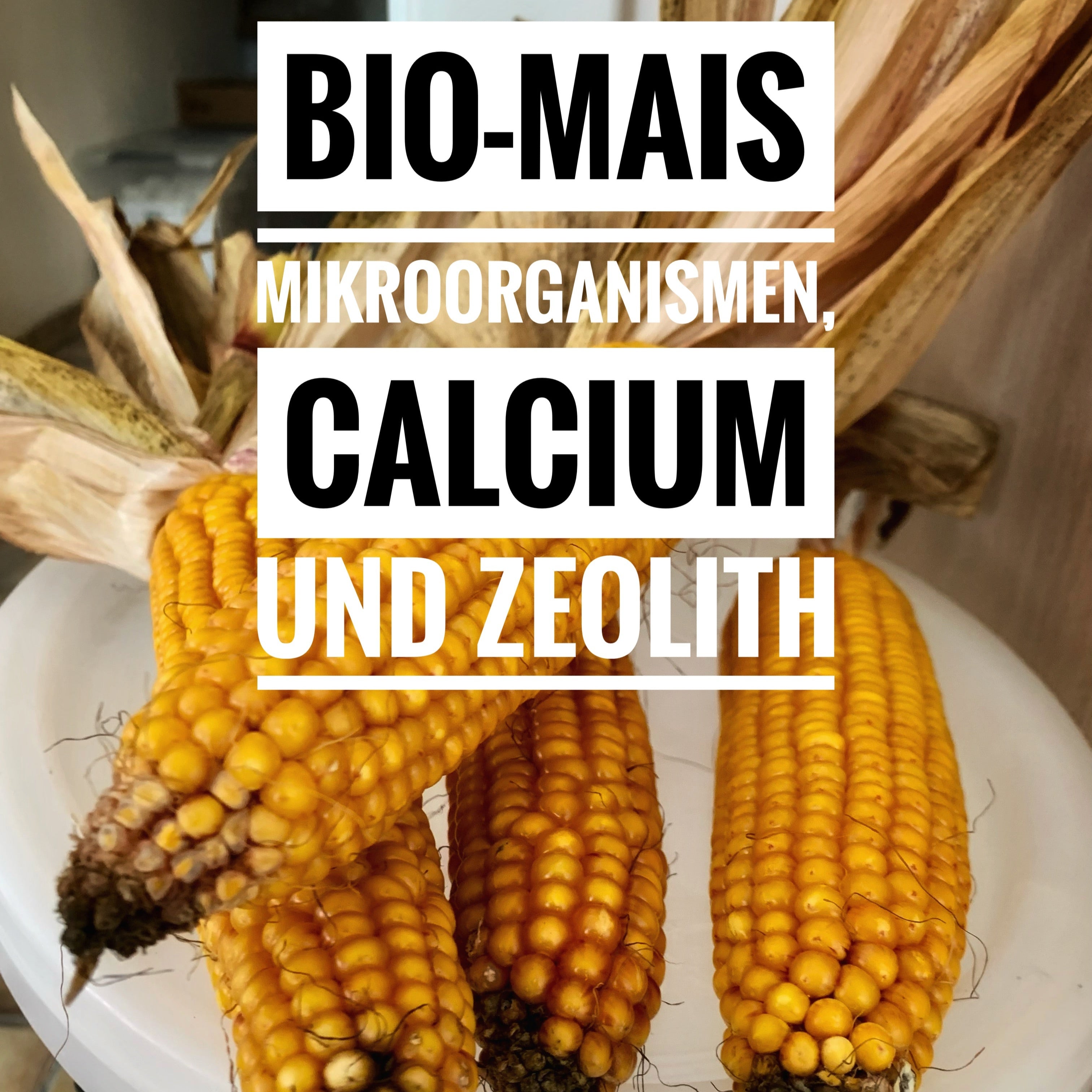
GRÜNKRAFT CALCIUM and GRÜNKRAFT Zeolith pur are foliar fertilizers – they are sprayed directly onto the leaves and act immediately there. Both are ground to less than 8 micrometers by the tribomechanical milling process (= gentle grinding where mineral particles collide, no metal abrasion, no heat). This fineness makes them stomata-permeable – they pass through the tiny stomata on the leaf surface and act directly in the plant tissue. Both are bio-compliant according to VO (EU) No. 2018/848.
GRÜNKRAFT CALCIUM – Immediate effect due to Calcium and CO₂
GRÜNKRAFT CALCIUM consists of tribomechanically activated calcite (= calcium carbonate, CaCO₃) and zeolite. When the fine particles hit the leaf and penetrate the stomata, a simple chemical reaction occurs on the leaf surface:
CaCO₃ → CaO + CO₂
The CO₂ is immediately available to the plant for photosynthesis – this is direct food for the plant cells, without going through the soil. The calcium oxide simultaneously strengthens the cell walls and improves stomata regulation (= the plant's ability to open and close its leaf openings and thus regulate water evaporation). The result: darker green, thicker leaves, less heat stress, better fruit quality – and specifically for tomatoes, less blossom end rot, which is caused by calcium deficiency.
Studies show: treated plants develop more chloroplasts, a higher polyphenol content in the tissue, and a measurable increase in dry matter content – meaning more nutrient density per fruit.
👉 GRÜNKRAFT CALCIUM – Foliar fertilizer with zeolite for arable farming, viticulture, and vegetable cultivation
GRÜNKRAFT Zeolith pur – Protection, nitrogen from the air, and minerals
GRÜNKRAFT Zeolith pur contains pure tribomechanically activated clinoptilolite zeolite. On the leaf, it acts in three ways simultaneously:
The silicate particles form a mechanical protective layer on the leaf surface – pests such as spider mites and fungal spores can no longer gain a foothold. No poison, no chemicals – only the physical structure of the mineral.
Dr. Peter Ost explains the second effect: The mineral particles on the leaf stimulate microorganisms that absorb nitrogen directly from the atmosphere and make it available to the leaf. This is why treated leaves become so strikingly dark green – they are supplied with natural atmospheric nitrogen without the need for additional fertilizer application.
Thirdly: With every kilogram of GRÜNKRAFT that lands on the field, calcium, potassium, magnesium, and silicon are directly applied to the leaf surface and, over time, into the soil.
In an independent test by VEGEPOLYS Innovation (France, 2016), GRÜNKRAFT-treated Chardonnay vines were tested against downy mildew. Researchers spontaneously noted: treated vines had thicker, darker green leaves and more vitality than all other experimental groups.
👉 GRÜNKRAFT Zeolith pur – pure zeolite foliar fertilizer for viticulture and intensive crops
Lime: the engine for everything else in the soil
Lime is not just a basic nutrient – it is the key to all other nutrients. Without the correct pH value (= soil acidity), plants cannot absorb fertilizer, even if it is present.
Carbonated lime from STEINKRAFT (BODENKRAFT K) is particularly fine and plant-available due to tribomechanical grinding (= gentle crushing without abrasion) – up to 96% plant availability. This saves costs and increases effectiveness.
And lime protects groundwater: With regular lime fertilization, nutrients are immediately made available to the plant instead of being leached into deeper soil layers.
Active Microorganisms: Activating Soil Life
A healthy soil is not a substrate – it is a living ecosystem. AM+PLUS Active Microorganisms from Austrian production introduce precisely those lactic acid bacteria, photosynthetic bacteria, and yeasts into the soil that promote humus formation, nutrient availability, and plant health from within.
In combination with zeolite, they unleash their full effect: zeolite creates the ideal soil structure and moisture, and microorganisms colonize this structure, making the soil alive.